How Is a Bike Safely Loaded Onto a Towing Vehicle?
When a motorcycle breaks down, gets involved in an accident, or becomes impossible to ride, getting it onto a towing vehicle is not simply a matter of lifting and securing it. A motorcycle needs to remain upright, stable, and properly supported throughout loading and transportation.
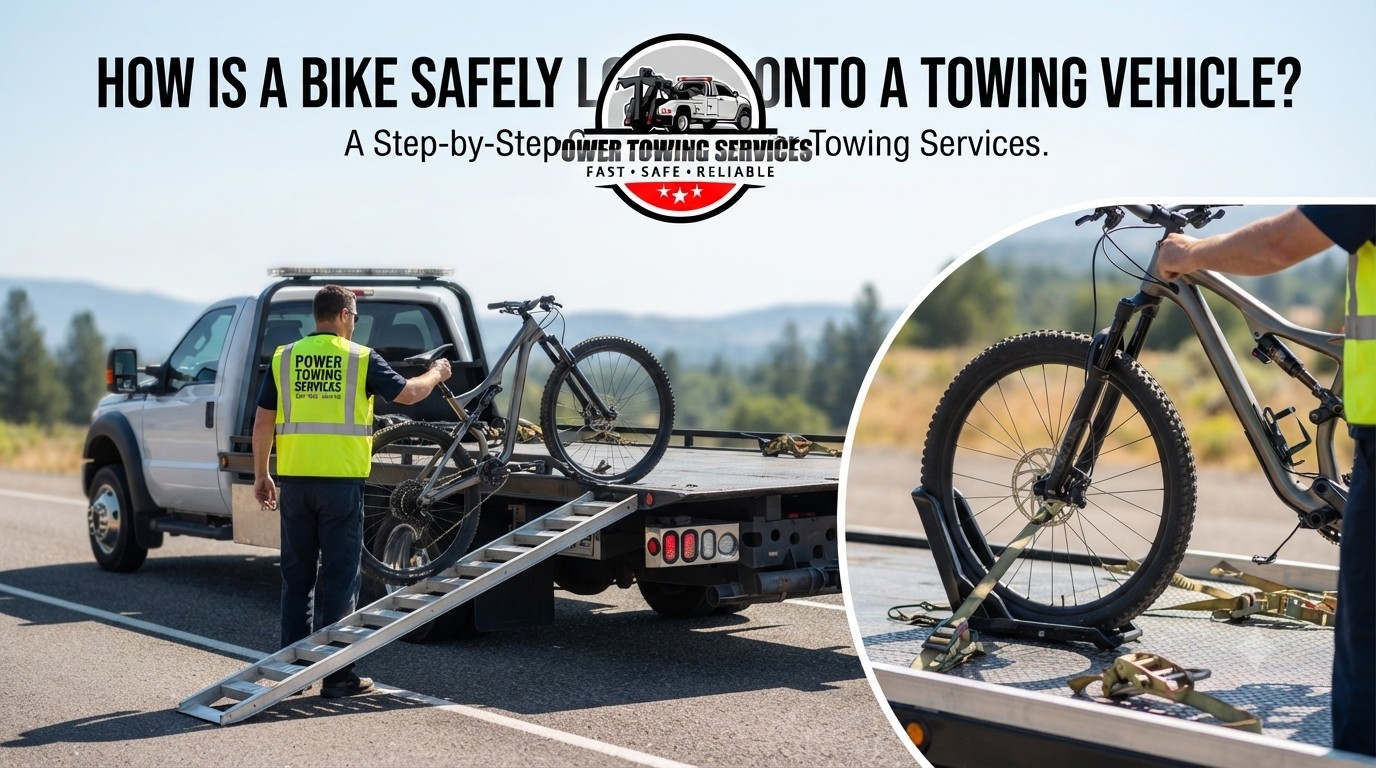
The loading method matters because an incorrectly positioned bike can move, lean, or become damaged during transit. A proper setup generally uses a suitable loading ramp, a front wheel chock, and appropriate tie-down equipment. Manufacturer guidance also recommends keeping the motorcycle upright and avoiding unsuitable attachment points such as handlebars or bodywork.
If you are searching for a bike tow near me, understanding the loading process can help you recognise whether the towing operator is using suitable equipment and handling your motorcycle carefully.
Why Does Safe Bike Loading Matter?
A motorcycle has only two wheels and a relatively narrow base compared with a car. Once it is placed on a towing platform, it needs additional support to prevent unwanted movement.
During transportation, acceleration, braking, turns, and road vibrations can place forces on the motorcycle and its securing equipment.
A safe loading process therefore needs to achieve three things:
Keep the motorcycle upright.
Prevent the wheels from moving unnecessarily.
Secure the motorcycle without damaging important components.
A front wheel chock can hold the front wheel in position, while suitable straps help prevent the motorcycle from leaning or shifting. Motorcycle transport guidance recommends using a properly rated carrier or platform and checking the manufacturer's recommended attachment points.
What Equipment Is Used To Load A Motorcycle?
The exact equipment depends on the motorcycle, towing vehicle, and condition of the bike.
Common equipment includes:
Loading Ramp
A ramp provides a controlled path from the ground to the towing platform. Its size and weight rating should be suitable for the motorcycle.
Front Wheel Chock
A wheel chock holds the front wheel in position and helps keep the motorcycle upright while it is being secured.
Soft Tie-Down Straps
Soft straps can help secure the motorcycle while reducing the risk of scratching painted or delicate components.
Rear Tie-Down Straps
Additional securing points may be used toward the rear of the motorcycle to reduce side-to-side movement.
Winch Or Assistance Equipment
If the motorcycle cannot be ridden or rolled normally, additional equipment may be needed to load it safely without forcing the damaged wheels or steering components.
The operator should inspect the towing equipment before loading and ensure that the vehicle and securing equipment are appropriate for the motorcycle's weight and design.
How Is A Bike Loaded Onto A Towing Vehicle?
The process can vary depending on the towing vehicle and the condition of the motorcycle, but a controlled loading sequence is important.
1. The Towing Vehicle Is Positioned Safely
The towing vehicle should be positioned on a suitable surface before loading begins.
The operator needs enough space to lower or position the ramp and maintain control of the motorcycle. The towing platform or trailer should also be secured against unwanted movement before loading.
2. The Motorcycle Is Aligned With The Ramp
The motorcycle should be aligned as straight as possible with the loading path.
If the bike can be rolled normally, the operator can guide it carefully toward the ramp. If it cannot move under its own power, suitable assistance equipment may be required.
Trying to force a damaged motorcycle onto a ramp can create additional problems, particularly if the steering, wheels, suspension, or frame have been damaged.
3. The Motorcycle Is Moved Onto The Platform
The motorcycle is guided slowly up the ramp and onto the towing platform.
The operator needs to maintain control throughout this stage. Riding a motorcycle onto a trailer or platform can introduce unnecessary risk, especially when the bike is damaged or the loading surface is unfamiliar. Guidance from U-Haul similarly recommends avoiding riding a motorcycle during loading and unloading because of the potential for damage or loss of control.
4. The Front Wheel Is Positioned In The Chock
Once the motorcycle reaches the platform, the front wheel is positioned securely in the wheel chock.
The chock helps prevent the front wheel from moving sideways or rolling forward and provides stability while the remaining securing work is completed.
The motorcycle should remain upright rather than resting on its side stand during transportation. Manufacturer guidance specifically recommends transporting motorcycles upright and properly restrained.
5. The Motorcycle Is Secured With Suitable Straps
The operator then attaches appropriate tie-down straps to suitable structural points.
The exact attachment locations depend on the motorcycle design and manufacturer recommendations. Straps should not interfere with brake lines, wiring, painted bodywork, or other vulnerable components.
Some motorcycle transport guidance recommends attachment around strong structural areas such as the lower triple clamp or frame rather than relying on fragile body panels.
6. The Rear Section Is Stabilised
Additional straps may be used toward the rear to reduce movement during transportation.
The goal is not simply to tighten as much as possible. The motorcycle should be held firmly while avoiding excessive force that could damage suspension components or other parts.
The straps should also be positioned symmetrically where appropriate so that the motorcycle remains balanced.
7. The Operator Checks The Load
Before the towing vehicle moves, the operator should check the wheel position, strap tension, anchor points, and overall stability.
Loose strap ends should be secured so they cannot interfere with wheels or other moving components.
A final stability check can help identify movement or an incorrectly positioned strap before the journey begins. Motorcycle securement guidance recommends checking that the bike does not lean or move within the chock after the straps have been tightened.
Which Parts Of A Motorcycle Should Not Be Used For Securing?
Not every visible part of a motorcycle is suitable for attaching a strap.
Operators should avoid using fragile body panels, mirrors, exhaust components, brake lines, wiring, or other parts that are not designed to handle securing forces.
Manufacturer instructions should take priority because attachment points can vary between motorcycle models.
For example, Indian Motorcycle's transport guidance specifically warns against restraining the motorcycle using the handlebars and recommends appropriate front attachment points while keeping straps away from wiring and brake lines.
This is one reason professional motorcycle towing requires equipment and handling methods suited to two-wheelers rather than simply adapting equipment intended for cars.
Can A Damaged Motorcycle Be Loaded Safely?
Yes, but the loading method may need to change depending on the damage.
A motorcycle with a flat tyre may still be rollable. A bike with a locked wheel, damaged steering, accident damage, or a mechanical failure may require additional equipment.
The operator should assess the motorcycle before attempting to load it.
For example, dragging a motorcycle with a locked wheel can cause further damage. A winch, wheel dolly, or other suitable equipment may be necessary depending on the situation.
The important point is to avoid treating every motorcycle as though it can be loaded in exactly the same way.
What Should You Check Before Requesting A Bike Tow?
When you need a bike tow near me, provide the towing operator with accurate information about the motorcycle and its location.
Tell them:
Motorcycle or scooter type
Whether the bike starts
Whether the wheels move
Whether it has accident damage
Whether the steering works
Your exact pickup location
Your destination
Any access restrictions at the location
This information helps the operator understand what equipment may be needed.
For example, a normally rolling motorcycle parked in an open area can present very different loading requirements from a damaged motorcycle lying in a difficult-to-access location.
How Do Bike Towing Charges Vary?
The amount you pay for a tow can depend on several factors rather than simply the size of the motorcycle.
Possible factors include:
Pickup distance
Destination distance
Time of service
Motorcycle condition
Loading difficulty
Type of towing equipment required
Traffic and road access
Additional assistance required
Therefore, bike towing charges can vary between different situations.
When requesting a quotation, explain the motorcycle's condition and provide accurate pickup and destination information. This allows the towing provider to understand the job before dispatching a vehicle.
Avoid choosing a service only because it advertises the lowest starting price. The final cost may depend on the actual towing conditions and services required.
If you need to move a damaged or non-running vehicle, explore our vehicle towing services in Bangalore to find a suitable recovery solution.
What Should You Do While Waiting For The Towing Vehicle?
If your motorcycle has broken down on a busy road, your first priority should be personal safety.
If it is possible and safe, move yourself and the motorcycle away from moving traffic. Use hazard warning measures where appropriate and avoid standing directly beside the motorcycle in an active traffic lane.
When contacting a towing provider, share your location clearly and explain the motorcycle's condition.
If the bike has been involved in an accident, avoid attempting to ride it simply to move it to another location if doing so could make the damage worse.
Giving the operator accurate information before arrival can also help them prepare the appropriate equipment.
If your motorcycle breaks down unexpectedly, explore our roadside assistance services in Bangalore to learn about the available support options.
Why Is Professional Motorcycle Towing Safer?
Professional towing operators can assess the motorcycle's condition, select suitable loading equipment, and secure the bike for transportation.
This becomes especially important when the motorcycle cannot start or has suffered damage.
A dedicated approach also reduces the temptation to improvise with ropes, unsuitable straps, or equipment intended for other vehicles.
The purpose of safe towing is not simply to move the motorcycle from one location to another. The bike should arrive without avoidable damage caused by incorrect loading or poor securement.
For dependable motorcycle towing, roadside assistance, and vehicle recovery, visit Power Towing Service Bangalore to explore the available towing solutions.
FAQ About Loading A Bike Onto A Towing Vehicle
How Is A Motorcycle Secured During Towing?
The motorcycle is normally positioned upright, with the front wheel held securely and suitable tie-down straps attached to appropriate structural points. The exact method depends on the motorcycle and the manufacturer's recommendations. Before transporting a motorcycle, ensure it is loaded securely and handled carefully. For additional information about transport regulations and road safety in Karnataka, refer to the Karnataka Transport Department website.
Can A Bike Be Towed If It Does Not Start?
Yes. A non-running motorcycle can often be loaded using suitable assistance equipment, depending on its condition. The operator should know in advance that the bike cannot be ridden or rolled normally.
Can I Ride My Bike Onto The Towing Vehicle?
It is generally safer to have the motorcycle loaded under controlled conditions rather than riding it onto a platform yourself, particularly when the bike is damaged or the loading surface is unfamiliar.
How Much Do Bike Towing Charges Usually Cost?
There is no single price for every towing job. Bike towing charges can vary according to distance, motorcycle condition, location, equipment requirements, timing, and loading difficulty. Request a quotation based on your specific situation.
What Is The Difference Between Motorcycle Towing And Bike Transport?
Motorcycle towing generally refers to moving a motorcycle because it has broken down, been damaged, or cannot be ridden. Bike transport can also refer to planned relocation from one place to another. The equipment and service requirements may differ.
What Should I Look For When Searching For A Bike Tow Near Me?
Check whether the provider handles two-wheelers, has appropriate loading equipment, understands motorcycle securement, provides clear pricing, and can reach your pickup location.
Can Improper Towing Damage A Motorcycle?
Yes. Incorrect attachment points, unsuitable straps, poor balance, or inadequate securing can cause scratches, component damage, or instability during transportation. Manufacturer instructions should be followed when securing the motorcycle.
Should A Motorcycle Be Left On Its Side Stand During Transport?
Manufacturer guidance for transport recommends keeping the motorcycle upright rather than relying on the side stand. The bike should be properly restrained using suitable securing equipment.
How Can You Ensure Safe Motorcycle Towing?
Safely loading a motorcycle onto a towing vehicle requires more than getting the bike onto a platform. The motorcycle needs to be aligned correctly, supported by suitable equipment, secured at appropriate points, and checked before transportation begins.
If you need motorcycle towing, provide the operator with accurate information about the bike's condition and location. This helps them prepare for the job and choose the right equipment.
When comparing bike towing charges, look beyond the starting price and consider whether the service includes suitable motorcycle-handling equipment and safe loading practices.
And when you search for a bike tow near me, choosing a provider that understands two-wheeler towing can help reduce the risk of avoidable damage during recovery.
Need Safe Motorcycle Towing in Bangalore?
For reliable motorcycle towing assistance, contact Power Towing Service Bangalore to discuss your bike’s condition, pickup location, and towing requirements.