Car First Aid Kit: What to Pack for Bangalore Roads
Why Every Car Needs a First Aid Kit in Bengaluru
A car first aid kit is essential for handling minor injuries during road emergencies in Bengaluru. Keep the legally required dressings, antiseptic cream, gauze, plasters and bandages within easy reach. Add gloves, wipes, water and emergency supplies. Check expiry dates every six months and keep Power Towing’s contact number ready for roadside assistance.
Key Facts About Car First Aid Kits in India
- Price
- Roadside help from ₹500 for a jump-start or flat tyre visit
- Duration
- Average arrival under 30 minutes on emergency calls
- Hours
- 24/7, every day of the year
- Areas covered
- Bangalore city and surrounding areas
- Legal basis
- Rule 138(4)(d) of the Central Motor Vehicles Rules
A car first aid kit holds the dressings, plasters, gauze and 0.5% Centrimide antiseptic cream that Indian vehicle rules expect you to carry. It treats minor cuts and burns until help arrives, so keep it within reach, not buried in the boot.
Breakdowns in Bengaluru traffic can leave you waiting on the roadside for a while. This guide covers what to pack, where to keep it, and how the kit fits alongside roadside assistance in Bangalore. That way, your first aid and your first call are both ready.
At A Glance
Price: Roadside help from ₹500 for a jump-start or flat tyre visit
Duration: Average arrival under 30 minutes on emergency calls
Hours: 24/7, every day of the year
Areas covered: Bangalore city and surrounding areas
Legal basis: Rule 138(4)(d) of the Central Motor Vehicles Rules
What Should A Car First Aid Kit Contain In India?
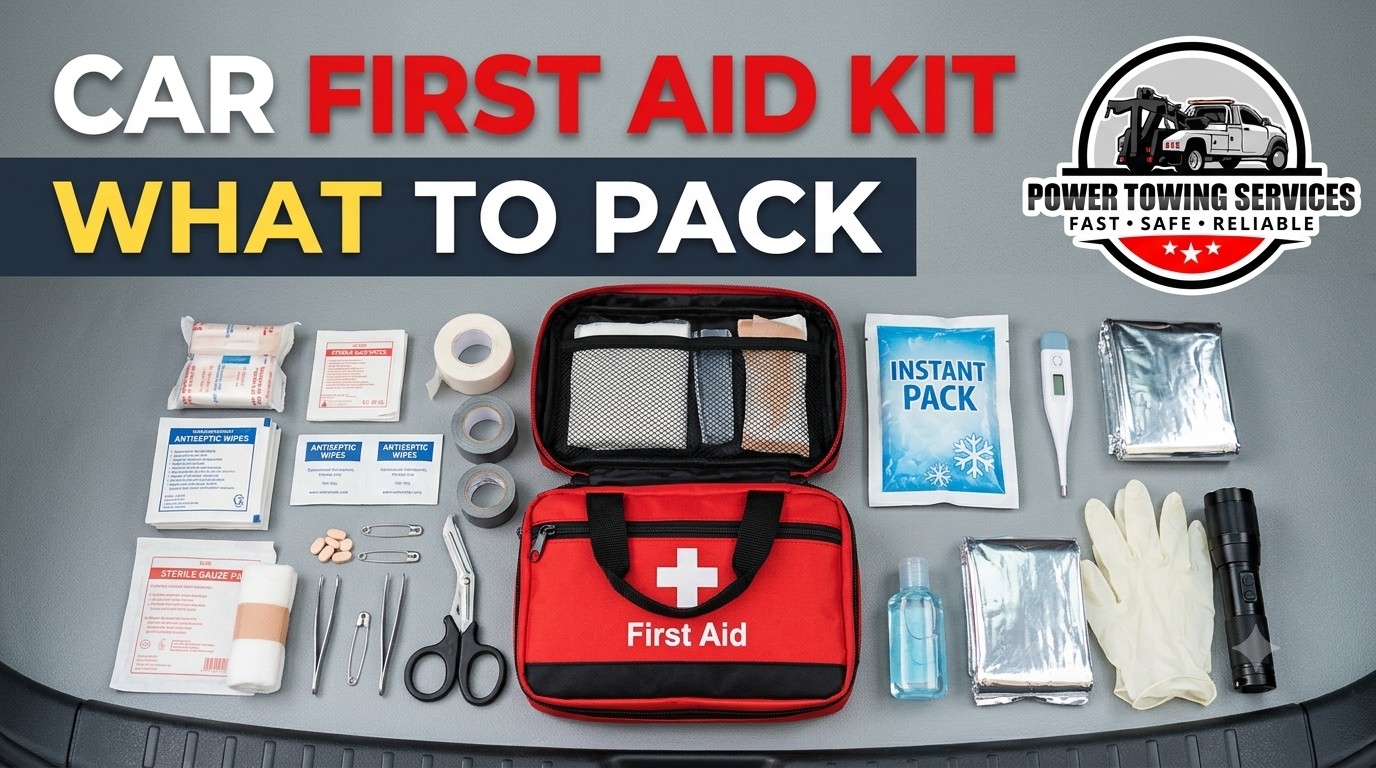
A car first aid kit should hold at least the items in Rule 138(4)(d). That means 0.5% Centrimide antiseptic cream, 1% Feracrylum gel, sterilised dressings, two kinds of plaster, gauze, and an elastic bandage. Add gloves, wipes, scissors, tweezers, and a blanket on top.
The rules have changed more than once. A March 2024 amendment added the Feracrylum gel, as TeamLease RegTech’s summary of the Sixth Amendment explains. Check the current text before you buy a ready-made box.
Item | What it does | Rule or extra |
Antiseptic cream, 0.5% Centrimide | Cleans minor cuts and scrapes | Named in the rule |
Feracrylum gel, 1% | Listed in the rule since March 2024 | Named in the rule |
Sterilised dressings | Cover a wound | Named in the rule |
Sterilised elastic plaster | Holds a dressing in place | Named in the rule |
Waterproof plaster | Protects small cuts in rain | Named in the rule |
Gauze | Pads and cleans a wound | Named in the rule |
Elastic bandage | Secures a dressing, supports a sprain | Named in the rule |
Disposable gloves | Protect you and the injured person | Extra |
Antiseptic wipes | Clean hands and skin before dressing | Extra |
Small scissors | Cut tape, gauze and bandage | Extra |
Tweezers | Lift out splinters | Extra |
Emergency blanket | Keeps a shaken passenger warm | Extra |
The first seven items come from the rule. The last five are our suggested extras, and none of them needs a prescription.
Ready-made boxes vary, so open yours and tick each row of the table. Fill any gap yourself before the first drive, and replace anything damp, torn or past its date.
If you drive children or older relatives, add the regular medicines they use in a labelled pouch, with their doctor’s instructions. Never guess a dose from memory in a stressful moment.
Where Should You Keep the Kit in Your Car?
Keep your car's first aid kit where the driver or passenger can reach it in seconds. A front seat pocket or rear door pocket works well. A kit locked under luggage in the boot is the one nobody can use in an emergency.
Heat is the other enemy. A closed car in the Bengaluru sun gets very hot, and heat can spoil creams, gels and plasters. Store the kit in a shaded spot, away from the dashboard and the rear parcel shelf.
Moisture is a quieter problem. Damp monsoon air can creep into an unsealed box and leave gauze moist, so seal each group of items in a zip bag and add a small silica gel sachet. Open the box after any long spell of rain to check.
Strap it down or use a non-slip mat so it cannot slide under braking
Tell every regular passenger where it sits
Keep a small torch beside it for night use
Keep gloves on top so they are the first thing you touch
What Is the Difference Between a Car Safety Kit and a Car Emergency Kit?
A car safety kit is the gear that makes a stopped car visible and fixable, such as a warning triangle, torch and tyre inflator. A car emergency kit is the bigger bag that adds first aid, water, a power bank and documents to that safety gear.
Kit | Main job | Typical contents | Where it lives |
First aid kit | Treat minor injuries | Dressings, plasters, gauze, antiseptic cream, bandage | Within reach of the front seats |
Safety kit | Make the car visible and fixable | Warning triangle, torch, jump leads, tyre inflator, reflective jacket | Boot, beside the spare wheel |
72-hour emergency kit | Keep passengers going if you are stranded | Water, snacks, power bank, blanket, documents, medicines | A bag in the boot or footwell |
The car's first aid kit is the one item that appears in all three. Rule 138 also lists a spare wheel, a tool kit, and a reflective warning triangle for cars. So, part of your safety gear is a legal requirement.
If your budget is tight, buy the first aid box, a warning triangle, a torch with fresh batteries, then jump leads. That order looks after people first, then the car, then your comfort while you wait.
For what to keep ready after dark, our night breakdown guide for Bangalore covers lights, power and paper.
What Is A 72 Hour Emergency Kit for A Car?
A 72-hour emergency kit is a bag of water, food, power, and warmth for everyone in your car. It covers three days if you are stranded. You will rarely need it, but heavy rain and road closures can turn a short trip into a long one.
Build it around the people who ride with you. A solo commuter and a family of five need very different bags, so scale each item to your usual passengers. Pack it beside your first aid box, not instead of it.
Drinking water and long-life snacks
A power bank and a charging cable
A torch with spare batteries
A light blanket or poncho for rain
Copies of your registration, insurance and licence
Cash in small notes and a pen
Any regular medicines, in a labelled pouch
Pack it in a soft bag you can carry, because you may need to leave the car. If it stalls in flood water, keep the key off and do not restart it. Move to higher ground only when it is safe to walk.
Check the water and snacks on the same six-month schedule as the first aid box and swap anything close to its date.
Jump leads and tyre fixes belong in the same boot. Our emergency road service guide explains when a jump-start is enough and when you need a tow.
What Should You Do While You Wait for Help on a Bengaluru Road?
Switch on your hazard lights, move the car off the carriageway if it still rolls, and keep everyone clear of traffic. Call 112 if anyone is hurt, then call your roadside team and share a live location pin.
While you wait, open the car's first aid kit, put on gloves, and check who needs help. Stay clear of the lane and keep passengers behind the car or the barrier.
Place the warning triangle behind the car, only where it is safe to walk
Put on gloves before you touch any wound
Use the kit for minor cuts, scrapes and burns only
Leave serious injuries to the emergency services on 112
On a tolled national highway, 1033 also reaches ambulance and patrol support
When you call your roadside team, say whether anyone is injured before you describe the car. Then give your live pin, the vehicle type, the fault, and whether it still rolls. A landmark such as a signal or an apartment gate helps the driver find you faster.
Power Towing states on its about page that emergency calls average under 30 minutes. Treat that as an average, because rain and traffic stretch every wait.
How Do You Build and Maintain Your Kit Step by Step?
To build a car first aid kit, start with a sturdy, clearly marked box and add the rule items, then your extras. Set a reminder to check expiry dates every six months. Each step below takes a few minutes.
Pick a sturdy, dust-proof box with a clear first-aid mark.
Buy or assemble the seven rule items from the table above.
Add the five extras and a card with 112 and your roadside number.
Seal loose items in zip bags so rain and spills cannot reach them.
Place the kit within reach and tell your passengers where it is.
Set a six-month reminder to check expiry dates and refill anything you used.
A kit helps most when you know what each item is for. Consider a short first aid course for you and your regular passengers.
Ready To Pack Your Kit?
Pack the kit this week, then save +91 9980345193 on your phone before your next drive. A well-stocked car first aid kit looks after people, and when the car itself fails, contact the Power Towing team to get it moving again.
Important Statistics About Car Safety and Emergency Preparedness
- Under 30 minutes Average arrival on emergency calls in Bangalore Power Towing Service Bangalore, About page
- From ₹500 Roadside jump-start or flat tyre visit in Bangalore Power Towing Service Bangalore, 2026
- 0.5% Centrimide antiseptic cream strength named in Rule 138(4)(d) Central Motor Vehicles Rules, 1989, as amended in 2024
Areas We Cover Across Bangalore and Surrounding Locations
Serving Bangalore and nearby: Deepanjali Nagar, Bangalore, Whitefield, Bangalore, Vijayanagar, Bangalore, Byraveshwaranagar, Bangalore, Banashankar, Bangalore, Attiguppe, Bangalore.
Frequently Asked Questions About Car First Aid Kits
Is a car first aid kit compulsory in India?
Yes, Rule 138(4)(d) of the Central Motor Vehicles Rules says drivers must carry a car first aid kit with the listed items. Check the current text because the list has changed.
What should be in a car emergency kit for a long drive?
A car emergency kit for a long drive needs first aid supplies, a torch, a power bank, water, snacks, a warning triangle and your documents. Add jump leads and a tyre inflator if you know how to use them.
How often should I replace the items?
Check expiry dates every six months and replaces anything you used straight away. Creams, gels and plasters can spoil in a hot car, so swap them sooner if the box sat in direct sun.
Can I use a ready-made first aid box?
Yes, if its contents match the rule list and nothing has expired. Compare the label with the table above, then add gloves, wipes and scissors if the box lacks them.
Does a car safety kit replace a first aid kit?
No, because a car safety kit makes the vehicle visible and fixable, while first aid supplies treat people. Carry both and keep the first aid box within reach of the front seats.
What if someone is seriously hurt?
Call 112 straight away and share your exact location. Use the kit only for minor cuts, scrapes and burns while you wait, and do not move against a badly injured person unless there is danger.