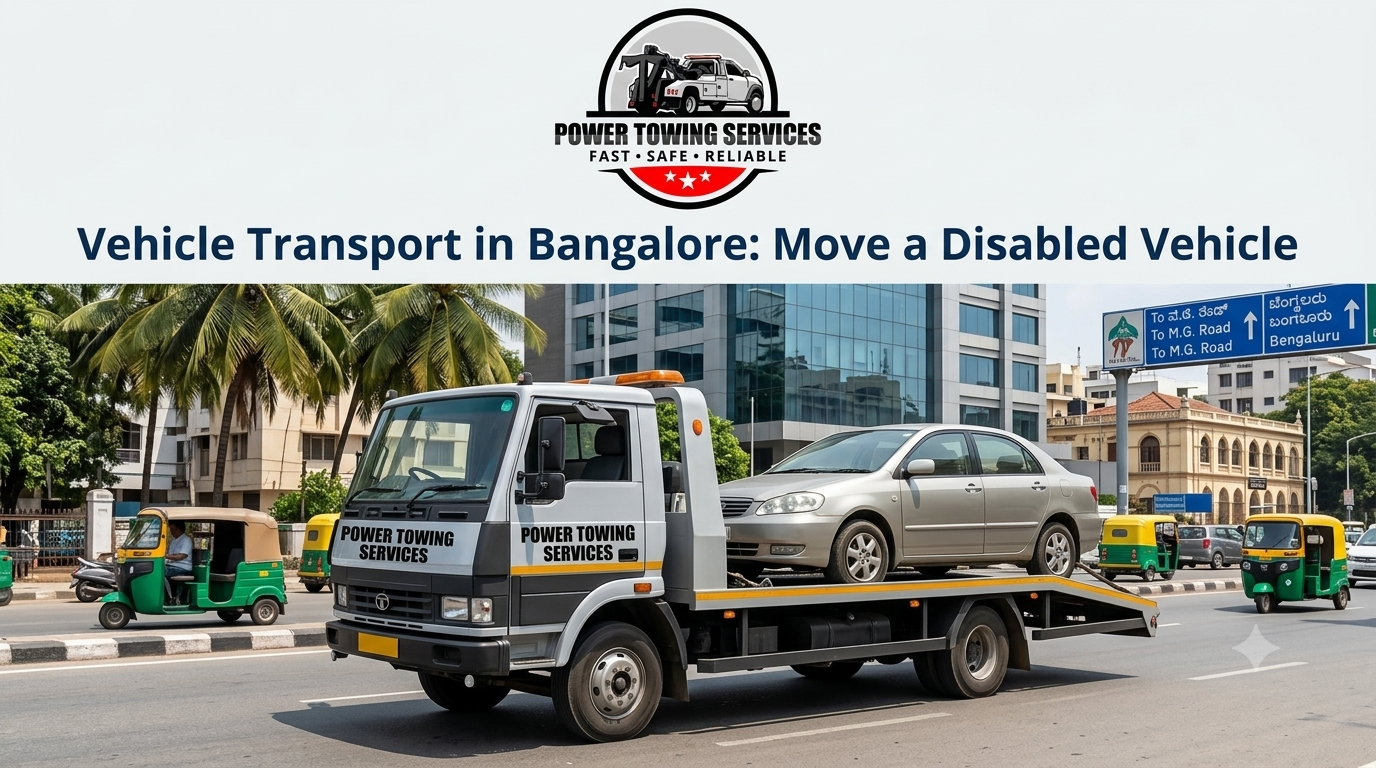
Vehicle Transport in Bangalore: Move a Disabled Vehicle
Vehicle Transport in Bangalore: Move a Disabled Vehicle
Moving a disabled vehicle from one place to another is a tricky matter. The vehicle could have an accident, suffer mechanical failures or breakdowns, or be relocated or moved, and must be transported while it cannot be driven on the road. How to approach vehicle transport is an important query that can help to secure a vehicle.
In a busy city like Bangalore, with roads, narrow lanes, flyovers, highways and traffic, a vehicle that cannot be driven on its own should not be forced to move by itself to its destination. With professional vehicle transport, the owner can get their vehicle moved with lesser problems.
Whether the vehicle needs to be taken to a workshop, the home, a service centre or another location, the preparation prior to transport can make everything easier.
What Is Vehicle Transport?
Vehicle transport is the task of bringing a vehicle from one point to another by employing suitable recovery or transportation equipment, instead of trying to get the vehicle to move by itself.
Vehicle transport is suitable for vehicles that:
Have serious mechanical problems
Cannot be started
Are accident damaged
Need to be taken to a workshop
Must be relocated to another area
Cannot be safely driven
Require transportation due to breakdown
The transport procedure will depend on the size, location and destination of the vehicle, as well as its condition.
When Should You Consider Vehicle Transport?
Not all vehicle problems require transport. Only those that cannot be resolved on location with suitable assistance require vehicle transport. But even in these cases, it may be necessary to bring the vehicle to another point with professional transport.
For example, a vehicle that has suffered serious accident damage could have wheel problems, steering problems, suspension problems or braking problems. Such a vehicle should not be driven further.
On the other hand, if a vehicle stops working and cannot be started again, it may be easier to utilize vehicle transport instead of trying to get it to start once again.
A professional can assess the situation and decide whether the vehicle should be repaired at the location or taken elsewhere.
Prepare Your Vehicle Before Transportation
Vehicle transport is a matter of great importance. One of the overlooked matters when it comes to vehicle transport is preparation. Beforehand, a few minutes must be devoted to checking the condition of the vehicle and removing any personal belongings that do not have to stay inside the vehicle.
Remove Personal Belongings
Remove valuable personal belongings, electronics, documents and other belongings that could be broken or damaged. Check the glove compartment, door pockets, centre console, boot, under seat storage and rear seats for personal possessions.
If the vehicle is in an unsafe position or is accident damaged, getting inside to get personal belongings should not be attempted.
Photograph the Vehicle
If it is safe to do so, take photos of the vehicle's condition before it is transported. This will make it possible to keep a paper trail of the vehicle's condition at the time of transport.
Take photos of the front and rear, wheels and any visible accident damage. Close up photos can help to build a paper trail of scratch marks, dents, broken parts or accident damage.
Choose the Right Transportation Method
Different transportation methods are required for different types of vehicles. A small car with a mechanical problem may require a different type of recovery than a damaged vehicle. Motorcycles, SUVs and larger vehicles may also require different types of recovery transportation.
What is most important is for the owner to understand that it is not the fastest method of vehicle recovery that is the most suitable. A professional can assess the situation and determine which method of transportation is best suited to the particular vehicle.
Vehicle Transport After an Accident
Accident damaged vehicles require extra care. Even if the vehicle appears to be driveable after an accident, the wheels, steering, suspension or brakes may be faulty. It is important not to assume that a vehicle that starts will be able to be driven safely.
When a vehicle is not safely drivable, emergency towing can be arranged to bring the vehicle to a workshop, authorised repair garage or other destination. The owner should inform the recovery provider if the vehicle has any visible accident damage.
What Information Should You Give the Transport Provider?
When it comes to arranging vehicle transport, providing clear information can make the task easier. At the time of booking the service, provide the following information:
Exact location of pickup
Destination
Type of vehicle
Vehicle model
Whether the vehicle starts or not
Whether the vehicle can be moved or not
Whether the vehicle has visible accident damage
Whether the vehicle has wheel or tyre problems
Any unusual mechanical symptoms
Preferred timing for transportation
If the vehicle is located in a basement, parking area, narrow lane or difficult access area, it must be mentioned in advance. The more details the owner can provide, the easier it will be for the transport provider to address the unique circumstances of the case.
Vehicle Transport From Difficult Locations
Bangalore is a busy city, and there are many areas where a vehicle may stop, including:
Apartment parking areas
Office parking lots
Basement parking
Narrow residential streets
Service roads
Commercial areas
High traffic roads
Highways
In such cases, the recovery team may need to examine the available space before attempting to recover the vehicle. But the owner must not try to move a severely damaged vehicle just so it can be repositioned. Instead, the owner should mention the location of the vehicle to the service provider and let the team determine how the job can be done.
Road Side Assistance vs Vehicle Transport
Road side assistance and vehicle transport are similar, but they are not the same. Road side assistance generally refers to assistance provided to a vehicle which has encountered a problem on the road. Depending on the situation, road side assistance may help to resolve a minor problem without the need to transport the vehicle.
Vehicle transport, on the other hand, focuses on transporting the vehicle from one point to another. For example, a minor problem can be resolved with road side assistance, whereas a vehicle which cannot be driven safely may require vehicle transport to take it to a workshop or another point.
Understanding the difference between both services can help vehicle owners to request the most suitable service.
What to Check Before the Vehicle Leaves
Before leaving, there are a few things that must be double checked and confirmed.
1. Confirm the Destination
Beforehand, make sure the service provider knows the correct destination address.
2.Check Personal Belongings Before leaving
make sure that personal valuables have been taken out of the vehicle.
3. Record Vehicle Condition
Make sure that the pictures of the vehicle's condition are taken into account.
4. Confirm Vehicle Information
Make sure that the right vehicle is being transported, and that the registration and model information has been provided.
5. Keep Your Contact Details Available
The transport provider may need to contact the owner if, for some reason, it is difficult to reach the designated destination.
What Happens After the Vehicle Reaches Its Destination?
The vehicle transport process does not end when the vehicle arrives at its destination. Before attempting to use the vehicle again, a few things must be inspected. Compare the condition of the vehicle with the photographs that were taken before transport. Check the vehicle's exterior, wheels, mirrors, windows and other accessible areas.
If the vehicle has been transported due to accident damage or serious mechanical failure, the owner should not attempt to immediately drive it back to the road without first having it inspected by a workshop or qualified technician.
How Emergency Roadside Service Can Help
Sometimes, a vehicle problem can be assessed before vehicle transport is necessary. An emergency roadside service provider can assist by determining what type of assistance may be required based on the situation. If the problem cannot be resolved at the location and the vehicle must be moved, vehicle transport may then become a viable option.
This is particularly important in situations when drivers are unaware whether they should continue driving or get professional recovery.
Why Professional Vehicle Transport Is Useful
There are several advantages to professional vehicle transport:
Reduces unnecessary driving
Helps to protect damaged vehicles
Saves time
Suitable for different locations
Provides a planned recovery
By utilising a professional vehicle transport service, drivers can get the most out of the recovery process. The vehicle does not have to be driven unnecessarily if it has a serious problem. Appropriate recovery equipment can help to transport vehicles that are not recommended to be driven. Time is saved, and the vehicle can be picked up from roads, parking areas, residential places and other suitable pickup points. Instead of improvising following an accident or breakdown, owners can arrange transport based on the vehicle's condition and destination.
Tips for a Smoother Vehicle Transport Experience
Some tips can help to make the vehicle transport experience smoother:
Keep your vehicle documents accessible.
Save the exact pickup and destination locations.
Describe the vehicle's condition honestly.
Mention whether the vehicle can start or move.
Remove valuable personal belongings.
Photograph visible damage before transportation.
Inform the provider about difficult access locations.
Keep your phone available during the recovery.
Inspect the vehicle after delivery.
Avoid driving the vehicle until it has been checked if serious damage is suspected.
Frequently Asked Questions
1. What is vehicle transport used for?
Vehicle transport is used to move a vehicle from one place to another. It can be used when a vehicle cannot or should not be driven, following breakdowns, accidents, mechanical failures or vehicle relocation.
2. Can a damaged car be transported?
Yes, a damaged vehicle can be transported.
3. Should I remove personal belongings before vehicle transport?
Yes, personal belongings should be removed before a vehicle is transported.
4. Should I photograph my vehicle before transportation?
Taking photographs of the condition of the vehicle before transportation is a worthwhile precaution, as it keeps a paper trail of the vehicle's condition.
5. Can roadside assistance arrange vehicle transport?
Depending on the provider and situation, roadside assistance may be able to help assess the problem and arrange towing or transportation if the vehicle cannot be repaired or driven safely at the location.
6. When is emergency towing necessary?
Emergency towing is necessary when a vehicle is disabled, accident damaged or otherwise unable to continue safely.
7. Can vehicle transport be used for long distance movement?
Yes, vehicle transportation can be used when a vehicle needs to be moved between different locations and it is inconvenient, impractical or unsuitable to be driven.